Antenna Accessories Manufacturer, Since 1996
Search the product
Installation and Selection
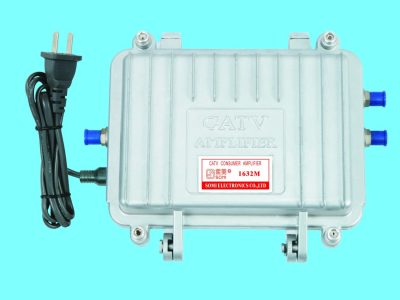
 Outdoor CATV Line Amplifiers: Gain, Slope and 127dBuV ExplainedNov 13,2026A line amplifier is specified by three things that interact: gain, output capability and how it handles the tilt that cable loss imposes. This article explains what 127 dBuV buys, why gain flatness matters more than gain, how AC 60 V powering works along a trunk, and how to run a selection calculation before ordering.
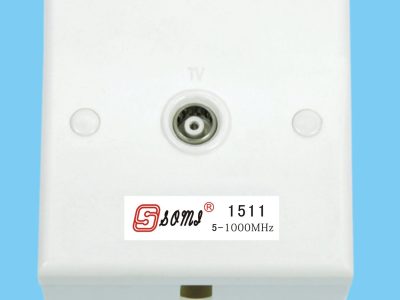
- TV Wall Sockets for European Installations: Types and StandardsNov 12,2026A wall socket is the last device in the chain and the first one the customer sees. This article compares the five families used in European and Indonesian installations, explains what 0.4 dB insertion loss means at the outlet, how a SAT socket splits satellite and terrestrial, and what to specify when the faceplate is customised.
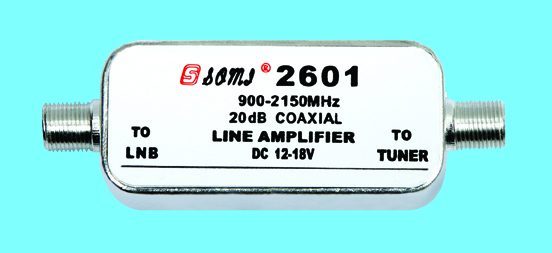
- 2.6GHz Splitters: Distributing Satellite IF Together with Terrestrial TVNov 12,2026A splitter rated to 1 GHz will pass satellite intermediate frequency and lose more at the top of the band than its datasheet admits. This article explains the 950-2400 MHz IF window, why a 2.6 GHz part behaves differently, how to read the loss at 2400 MHz, and how to combine satellite and terrestrial feeds without degrading either.
- Amplify Near the Aerial, Split Passively Near the TVsNov 9,2026Most weak-signal complaints are wiring problems, not signal problems. The working rule is simple: apply gain as early as possible, then distribute passively as close to the receivers as possible. This article explains why over-amplification lowers the signal-to-noise ratio, walks through three typical topologies and lists the installation errors that produce callbacks.

Antenna Connectors Manufacturer
www.hzsomi.com