How to Choose an OEM Factory for TV Signal Connectors
Choose a connector factory by what it can prove, not by what it lists. Ask who owns the tooling, which processes run in-house, what the sampling and mass-production windows are, whether a first-article report is standard, and how the factory handles a drawing change after approval. A catalogue is a starting point for a product discussion, not evidence of capability. The answers to those five questions, plus a factory visit or a video audit, tell you whether the second order will match the first.
Factory or trader: the first question, asked properly
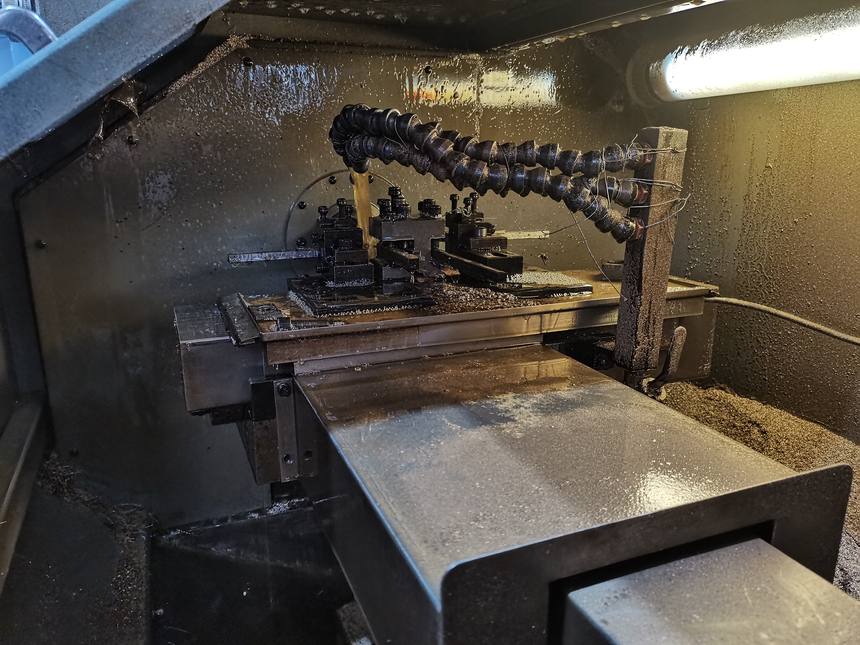
Asking a supplier whether they are a factory produces a predictable answer. A better question is which production steps happen inside the building. For a TV signal connector that means stamping or machining of the body, plating, injection moulding of the insulator, assembly and test. A supplier who performs two of those and buys the rest is not automatically unsuitable, but the quotation should show which steps are subcontracted, because that is where lead times and quality variation come from.
The second question is who owns the tooling. If the mould for your custom body belongs to the supplier, moving the part later means paying for it twice. Ownership should be stated in the quotation, not negotiated after a quality problem.
Six screening criteria
The criteria below are ordered by how quickly they eliminate a supplier. Each can be verified before a sample is ordered, and each has a concrete answer rather than an opinion.
- Process coverage: which of stamping, machining, plating, moulding, assembly and test are in-house.
- Drawing response: how long it takes to return a marked-up drawing with tolerances and material callouts.
- Sampling window: a stated number of working days after drawing approval, not a range that starts whenever production is free.
- First-article report: whether dimensional and electrical results are provided as standard or only on request.
- Tooling ownership and maintenance: who pays for wear, and at what shot count the tool is replaced.
- Change control: what happens when you revise the drawing after approval, and whether a new sample is required.
What a drawing-based quotation should contain
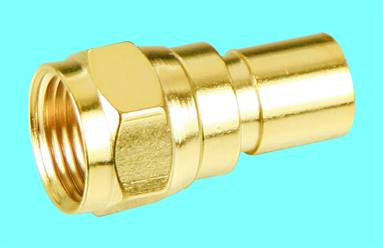
A quotation for a custom connector that contains only a price and a lead time is not quotable against. The document should identify the material and plating for the body and the centre pin, the dielectric material, the applicable interface standard, the plating thickness, the packaging format and the MOQ per variant. Where the drawing leaves a tolerance open, the supplier should propose a value and mark it, because an open tolerance becomes a dispute at inspection.
A useful test is to send the same drawing to three suppliers and compare how they respond to one deliberately tight tolerance. The one who asks which feature is functional is the one who intends to manufacture it; the ones who accept everything either did not read the drawing or intend to negotiate after the order.
This is also the point where a supplier's technical depth becomes visible. A factory that builds connectors every day will query a drawing that cannot be made at the stated price, and will propose an alternative before quoting. A trader forwards the drawing and returns whatever the workshop says.
Reading sampling and MOQ figures
Sampling and MOQ figures are only meaningful when the clock is defined. At SOMI, sampling runs 15 to 20 working days after drawing confirmation and mass production runs 25 to 30 days per order, with a connector MOQ of 5,000 pieces per SKU. Those are our terms and worth using as a benchmark, not as a rule that every supplier meets: the useful comparison is whether a supplier states the start event, the unit (working or calendar days) and what happens when the sample is rejected.
| Item | What to confirm in writing | Why it decides the project |
|---|---|---|
| Sampling | Working days after drawing approval, sample quantity, who pays freight | A vague window hides a queue you cannot see |
| First article | Dimensional plus electrical report, with the instruments used | Without it, approval is a visual opinion |
| MOQ | Per SKU or per order, and whether mixed variants are allowed | Per-SKU MOQ multiplies the cost of a multi-variant project |
| Mass production | Days per order after sample approval, and the review point | The second order is where lead times usually slip |
| Tooling | One-off cost, ownership, wear allowance, replacement trigger | Unowned tooling locks you to one supplier |
Specification transparency as a trust signal
The same test applies to the product range itself. A factory that builds the full TV signal connector range - including F connectors in compression, twist-on, crimp and PCB-mount terminations - can answer a question about plating thickness without leaving the building. A supplier who covers only one interface type is usually reselling.
A supplier who publishes insertion loss, return loss and shielding figures with test methods has given you a way to reject a delivery. A supplier who publishes only a product photograph and a frequency range has given you a way to receive one. The difference shows up at incoming inspection, where the first supplier's goods can be measured against a document and the second supplier's goods can only be judged by eye.
Auditing before the first order
A factory audit does not need to be a week long. Four observations cover most of the risk, and each can be made in an hour.
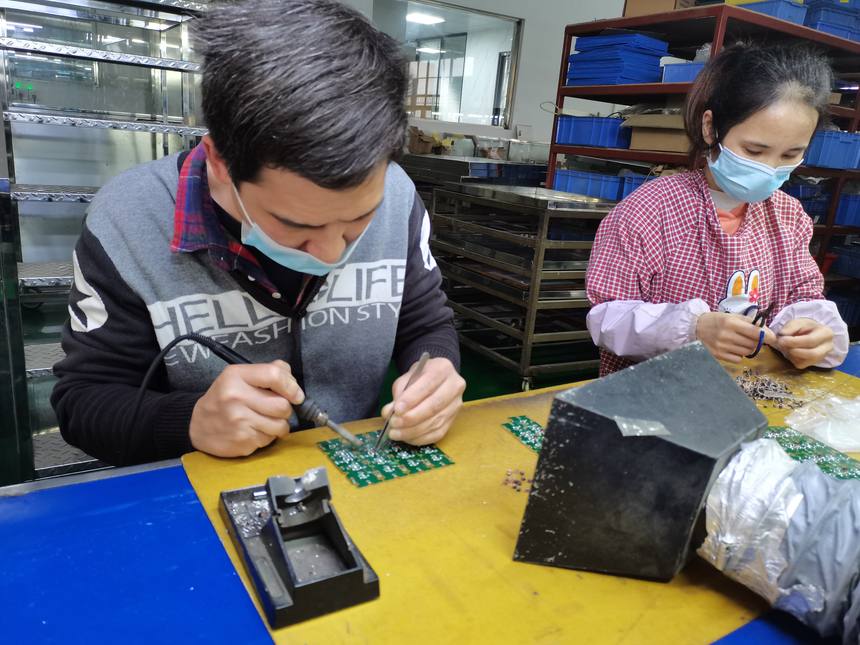
- Walk the line from raw material to packing and confirm the processes claimed in the quotation actually exist.
- Ask to see the calibration record for the test equipment used on your part type.
- Check how rejected parts are segregated, and whether the scrap bin matches the reported yield.
- Ask for one recent first-article report for a similar part, with the customer name removed.
The question that predicts the second order
Ask what happens when a plating lot fails the salt-spray check after the parts are already packed. The answer describes the factory's real quality system: whether the batch is held, reworked or shipped with a note. Suppliers who answer with a procedure and a hold point are the ones whose second delivery matches the first.
Need this checked against your own signal chain?
Send a drawing and we will return a marked-up version with tolerances, a sampling date and an MOQ per variant. Send the details through our inquiry form or reach the team on the contact page.
Request a quotation