From Drawing to Mass Production: Our 15-20 Day Sampling Process
Sampling takes 15 to 20 working days after the drawing is confirmed, and mass production takes 25 to 30 days per order after the sample is approved. The clock starts when both sides agree on a marked-up drawing, not when the enquiry arrives, because tooling and material cannot be committed against an unresolved drawing. Within that window the factory completes drawing review, tooling and first sample, dimensional and electrical verification, and a first-article report for approval.
Stage one: drawing review and DFM feedback
A drawing that arrives as a PDF with an open tolerance on the centre-pin position is not ready for tooling. The first stage is a manufacturability review: which dimensions are functional, which are cosmetic, what the plating thickness must be, and whether the proposed material suits the application. The output is a marked-up drawing with every previously open tolerance filled in by agreement.
This stage is where most of the schedule is won or lost. A factory that returns the mark-up in two days and a factory that returns it in ten days will produce the same sample, but only one of them will hit a 15 to 20 day window. The buyer's contribution is equally decisive: a single named technical contact who can approve a deviation the same day removes days from every later stage.
- Send a 2D drawing with tolerances, a material callout and a plating specification.
- State the application: indoor or outdoor, mating cycles, operating temperature, current rating.
- Name one person who can approve a drawing deviation without a committee.
- Say what the sample is for - field trial, customer approval, or tooling verification - because the sample quantity follows from that.
Stage two: tooling and first sample
Tooling covers the body, the insulator and any assembly fixture. For a standard interface the body tool may already exist, which is why a derivative part samples faster than a new design. For a new body the tool has to be cut, tried and corrected, and that correction cycle is the least compressible part of the schedule.
The first sample is not a production part. It is a part made to prove the tool, and it should be measured against the drawing before it is shipped, not after it arrives. A supplier who sends a sample without a measurement report is asking the buyer to do the verification work in a different country.
Sample quantity deserves a decision rather than a default. Three pieces are enough to prove a dimension; they are not enough to prove a process. Ten to twenty pieces, taken across the first hour of a run, show whether the tool is stable and whether the assembly fixture holds. Buyers who plan a field trial should order the trial quantity as part of the sample run, so the parts in the field are the parts that were measured, not a later batch made after the tool was adjusted.
Stage three: first-article report
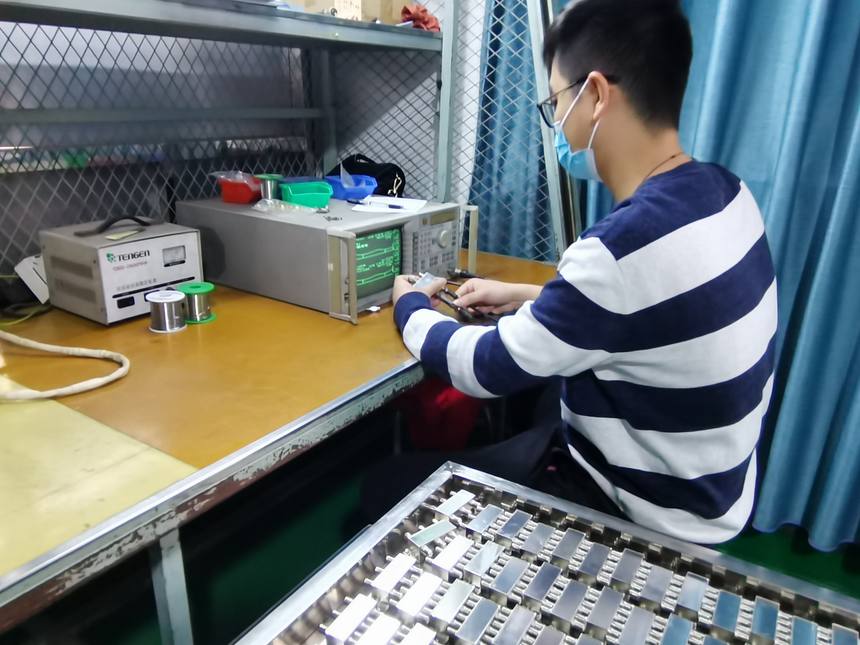
A first-article inspection report links every dimension on the drawing to a measured value and an instrument. It is the document an operator's quality department will ask for two years later, and it is the reason a sample approval can be defended after the fact.
| Report section | Content | Why the buyer needs it |
|---|---|---|
| Dimensional | Every toleranced feature, measured, with the instrument used | Shows the part matches the approved drawing, not a similar one |
| Electrical | Contact resistance, insulation resistance, withstand voltage, VSWR where applicable | Catches plating and assembly faults that a visual check misses |
| Material and plating | Material certificate and plating thickness readings | Supports the corrosion claim made in the quotation |
| Visual and functional | Mating force, thread engagement, appearance criteria | Defines what 'good' means before mass production, not after |
Stage four: pilot run
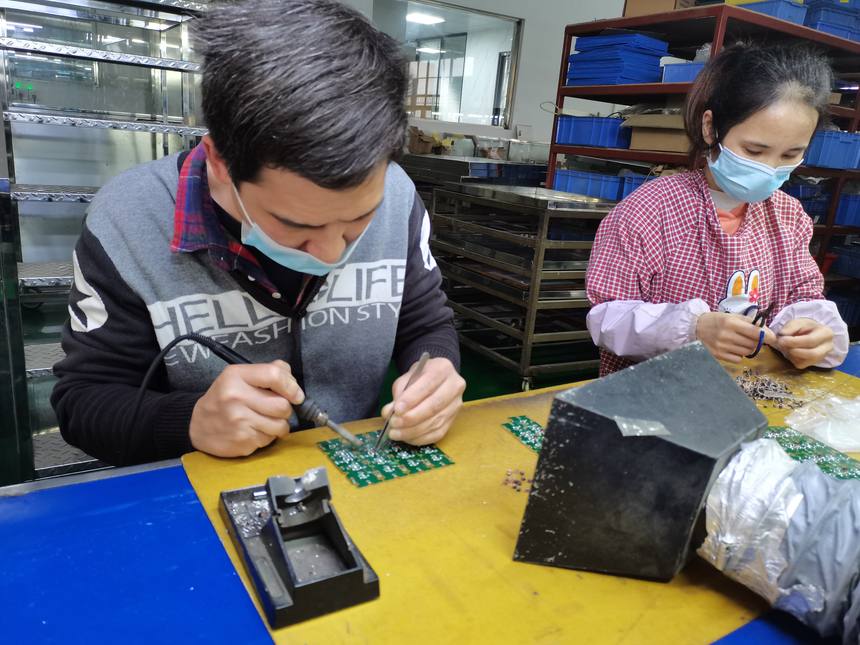
A pilot run of a few hundred pieces proves the process rather than the design. It reveals whether the assembly fixture holds tolerance over a shift, whether the plating bath drifts, and whether the packing method survives transport. Buyers who skip the pilot and go straight from a single sample to 5,000 pieces are buying the factory's process capability on trust.
The pilot also produces the reference sample that both sides keep. When a dispute arises six months later about plating colour or mating force, that sample is the arbiter, and it is worth photographing and sealing at the time.
Stage five: mass production
Mass production runs 25 to 30 days per order after sample approval, with a connector MOQ of 5,000 pieces per SKU. The figure is per order and per SKU, which matters for a project with several variants: five variants at 5,000 each is a different commitment from one variant at 5,000, and the quotation should make that explicit rather than leaving it to the purchase order.
The four reasons sampling runs late
Late samples are rarely caused by the machining itself. In practice they come from four predictable places, and each can be closed before the order is placed.
- Drawing changes after tooling has started, which restart the correction cycle.
- Plating specification added late, after the sample has already been assembled.
- Sample quantity too small to represent the process, forcing a second round.
- Approval waiting on a buyer's customer rather than the buyer, with no interim decision recorded.
How to compress the schedule without skipping steps
Two things genuinely shorten a programme: approve the drawing in one round by sending a complete specification, and run the pilot concurrently with the customer's own field trial so that both finish on the same date. Everything else is negotiation about queue position, and queue position changes what ships first, not how long a tool takes to cut.
Need this checked against your own signal chain?
Send a drawing with tolerances and we will return a marked-up version plus a dated sampling commitment for your part. Send the details through our inquiry form or reach the team on the contact page.
Request a quotation